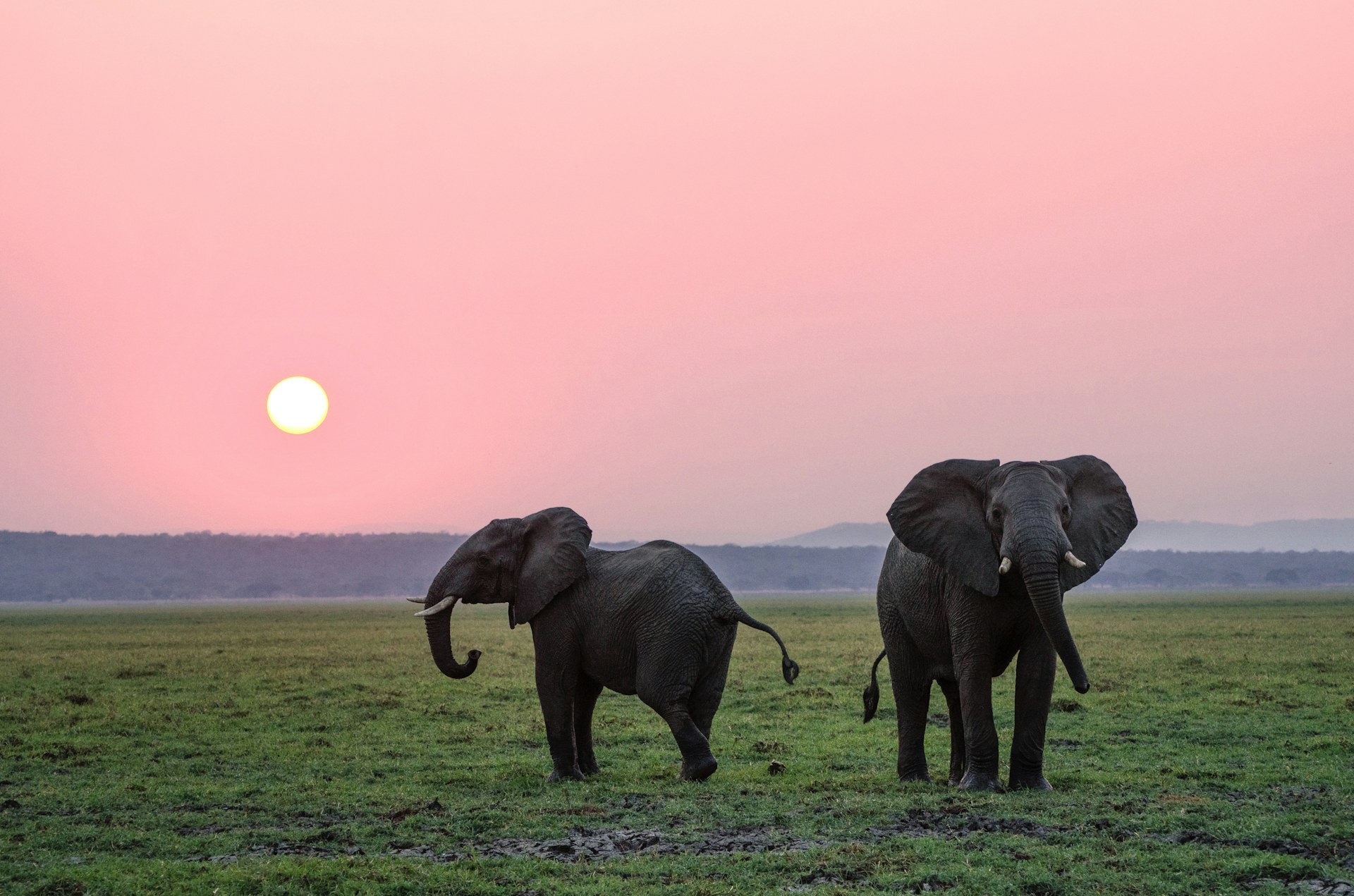
We share a responsibility to safeguard all life and to care for the Earth that sustains us.
We begin from a single premise — that no life is expendable.
Injustice does not discriminate by species.
One Kind World Foundation was founded on the conviction that injustice does not discriminate by species. It settles wherever a life stands undefended.
The exploitation of animals, the destruction of ecosystems, the persistence of hunger amid a world of plenty, and the erosion of public health all arise from a shared structural logic: industrialized systems built upon a single worldview, one that instrumentalizes life, commodifies the natural world, and treats vulnerability as a condition warranting exploitation. One Kind World Foundation proceeds from a different premise: that no society can claim advancement while it normalizes preventable suffering, ecological devastation, and the erasure of life in service of consumption, profit, and convenience.
The land exhausted, the water consumed, the forests cleared, the communities sickened: each flows from that same organizing decision, that conscious, feeling beings, human and nonhuman, and the planet we all inhabit, are treated as expendable.
Our purpose is to dismantle systems of harm and replace them with institutions founded upon justice, compassion, and respect for life. We advance that work through education, legal reform, and principled public leadership. Laws that sanction the exploitation of sentient life must be replaced by laws that recognize and protect its inherent worth. A just society does not leave compassion to individual choice. It makes compassion a public principle.
We hold that all sentient life possesses intrinsic worth. Every generation becomes the steward of a world it did not create and the ancestor of one it will never see. Our measure of success is simple: the degree to which life is protected, the Earth is safeguarded, and future generations inherit a living world sustained by greater wisdom, stewardship, and care than the one entrusted to us. What we ask, ultimately, is reverence for life in all its forms and for the Earth that sustains it.
of all mammal biomass on Earth is now human or animals confined within human systems — wild mammals comprise just 4%.
people endure hunger on a planet fully capable of feeding them all.
Land animals, and trillions more from the sea, are bred, confined, and slaughtered every year.
“The injustice of harming other beings is no different, whether they are human or not.”Theophrastus, successor to Aristotle (c. 371–287 BCE)

A personal covenant for the living world.
I pledge to move through the living world with awareness, conscience, and care.
- To recognize that suffering does not require visibility to exist, and that neither convenience, custom, nor collective acceptance can make cruelty morally legitimate.
- To examine what I have inherited, and to refuse participation in systems built upon exploitation, confinement, dispossession, or the diminishment of life.
- To extend my circle of consideration beyond my own species, and to recognize my responsibility to the land, the waters, the forests, the oceans, and the living systems upon which all life depends.
- To carry what I know with humility, allowing that knowledge to shape the way I live, consume, speak, and choose.
- To live in a way that leaves less suffering in the world than I found, and to protect what is vulnerable. To honor the understanding that every living being possesses inherent worth beyond power, profit, appetite, or utility.
May I live in conscious relationship with the lives my existence touches, the future generations who will inherit what I leave behind, and the living world that sustains us all.
For all who share this world.


“You cannot get through a single day without having an impact on the world around you. What you do makes a difference, and you have to decide what kind of difference you want to make.”Dr. Jane Goodall

I have loved animals for as long as I can remember.
Not only the familiar companions who curl beside us in the quiet of our homes, but those whose names we may never know; those who live in forests and oceans, on city streets and in forgotten corners of the world, and those whose lives pass unseen behind walls few of us will ever enter.
As a child, I carried lost or abandoned animals home in my arms and pockets: kittens trembling from the rain, fledglings fallen too soon from their nests, dogs made wary by hunger or harm. I believed that if I could offer them safety, love, and a place to begin again, I had done enough.
With time came a more difficult understanding.
No act of kindness, however meaningful, can by itself change the structures that allow suffering to endure. As long as sentient life is confined, exploited, slaughtered, driven toward extinction, or treated as though its existence carries less value than our convenience, our work remains unfinished.
Many people love animals. I have never questioned that.
The question is whether our compassion extends beyond what is familiar. We cherish the dog sleeping at our feet while overlooking the pig whose intelligence rivals that of a young child. We marvel at dolphins while rarely considering that fish recognize familiar faces, elephants grieve their dead, octopuses solve complex problems with astonishing ingenuity, chickens pass learned knowledge to their young and dream in sleep, and rats laugh when they play. Science has not diminished the mystery of life; it has deepened it, making the boundary we have drawn between “us” and “them” harder and harder to defend.

We live in a world where sentient beings who think, remember, grieve, and feel are caged, experimented upon, flayed, slaughtered, and erased from the story of significance in order to preserve comforts and customs that have learned to call themselves humane. Each year, more than 92 billion land animals and trillions of fish are killed, many bred into existence solely to die, their lives reduced to units in a supply chain that rarely pauses to acknowledge they were lives at all.
This harm is not confined to nonhuman life.
The same forces that devalue the living world devalue human communities as well. Across continents, children grow up beside poisoned rivers. Families are displaced by conflict, disaster, and environmental collapse. Farmers lose ancestral land to floods and foreign hands. Workers, many of them children, endure dangerous conditions to produce goods designed to be discarded. On a planet capable of feeding everyone, thousands of children die each day from hunger and hunger-related causes, even as vast quantities of grain and water are diverted to feed animals raised for slaughter. Entire communities breathe polluted air, drink contaminated water, and bear the burden of decisions made far beyond their borders. These are not separate injustices; they are different expressions of the same failure to recognize the dignity of life.
We are often told this is the price of progress.
Yet progress that rests upon the erosion of lives and landscapes is not progress. It is a cost we have learned to justify.
The Earth is not a backdrop to human history, nor a storehouse of resources awaiting extraction. It is the living home that makes every history possible, intricate beyond measure, generous beyond deserving, and utterly irreplaceable. The Earth gives us every breath we draw, every harvest that nourishes us, every ocean that sustains us, and the birdsong that greets each sunrise, reminding us that we are part of something infinitely larger than ourselves. We have never stood apart from the living world; we have always belonged to it.
Yet despite all we have learned, we continue to exhaust the forests that shelter us, empty the oceans that sustain us, poison rivers that have nourished civilizations for millennia, and destroy the very systems that make life possible, often in pursuit of conveniences that vanish almost as quickly as they are consumed.
In the end, it is not only life that bears the consequences of our choices. It is our home.
I have witnessed enough suffering to understand the cost of indifference, and enough kindness to remain convinced that humanity is capable of far more than we have yet become. Knowledge alone, however, has never been enough. Compassion must be joined by education, thoughtful public policy, and a willingness to reshape the structures that govern our common life. The measure of what we know will always be found in what we choose to do.
This is the work to which I am devoting my life.
I make this vow to all life and to the Earth, which has given us more than we could ever repay: I will devote the balance of my days to defending all who have been left vulnerable, to upholding the inviolable right of every being to live free from domination and harm, to protecting the living world in its fullness, to confronting and dismantling systems that exploit the defenseless, devastate the Earth, and deny justice to human and nonhuman life, and to forging a future worthy of those who must live with the irrevocable echo of our choices.
I hope you will choose to build that future with me.
With love and much hope,

For all life. For our shared and only home.
A vegan diet is probably the single biggest way to reduce your impact on planet Earth — not just greenhouse gases, but global acidification, land use and water use.
Support Our Work
One Kind World Foundation is just beginning. Your generosity helps transform a vision into meaningful work.